
The IVF Process — Step 5: Advanced Laboratory Fertilization
Once your mature eggs are securely harvested and paternal cells are prepared, the critical biological phase of fertilization begins. At Akanksha IVF Centre, highly regarded as the best IVF centre in Delhi for clinical embryology, our advanced cleanroom laboratory applies specialized tools to support and guide successful fertilization markers.
Scientific Insemination Frameworks
Depending on your personal diagnostics, background medical history, and semen parameters, our senior embryologists deploy one of two primary scientific protocols to combine your genetic material:
- Conventional Insemination: For cycles showing normal male factors, mature eggs are placed inside specialized petri dishes containing nutrient-rich culture media alongside roughly 50,000 to 100,000 processed, highly motile sperm. This allows cellular binding and penetration to unfold naturally in a controlled incubator environment.
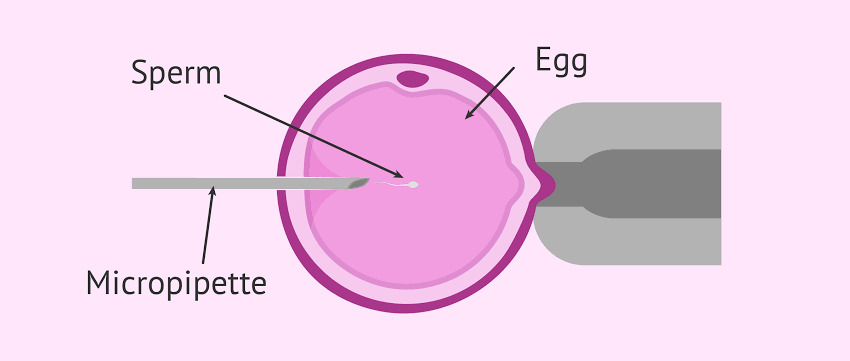
- Intracytoplasmic Sperm Injection (ICSI): If your diagnostic history includes low sperm counts, diminished forward movement, abnormal morphology, or unexplained past fertilization issues, ICSI is selected. Using ultra-precise robotic micromanipulators, an embryologist safely stabilizes a single egg and injects one isolated, structurally ideal sperm directly into its center.
Verifying Successful Cellular Activation
Following the insemination or ICSI procedure, the dishes are safely returned to our high-performance incubators overnight. Approximately 16 to 18 hours later, embryologists perform a precise assessment under high-powered microscopes.
Successful fertilization is officially confirmed when they see two distinct circles inside the cell—called pronuclei—which represent the genetic contributions from both parent systems. These successfully activated cells are now officially classified as embryos, ready to advance to the cell division tracking phase.